

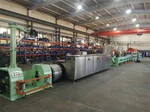
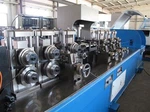
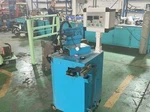
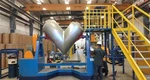
Welding Wire Auxiliary Equipment
TECHNICAL PROCUREMENT & CONFIGURATION GUIDE
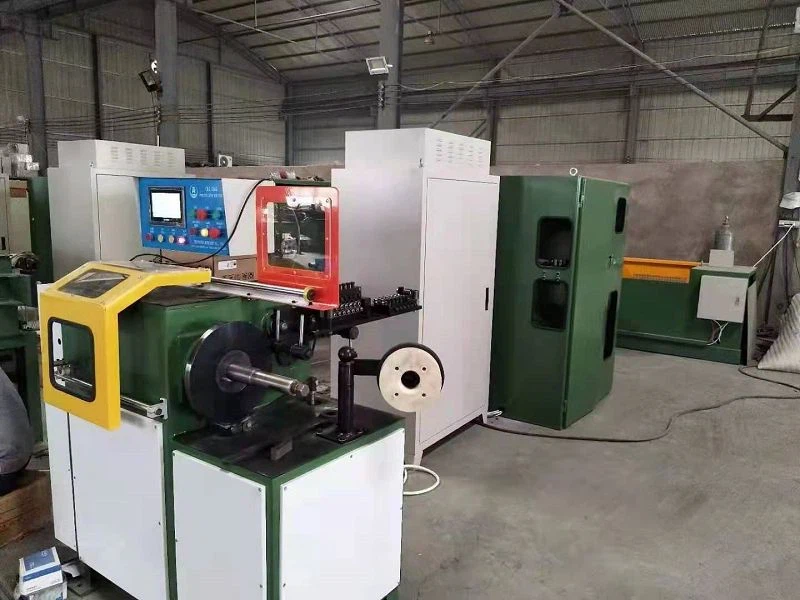
Welding wire auxiliary equipment supports the critical stages between wire processing and finished-wire packaging. Depending on the production process, the equipment can include wire pay-off and take-up systems, straightening and guiding units, precision winding equipment, spool winding systems, layer winding mechanisms, traverse units, and other line-side handling equipment.
For welding wire manufacturers, selecting the right auxiliary equipment is never simply a matter of maximizing machine speed. The configuration must seamlessly match the wire diameter, material, line speed, winding method, package format, coil weight, tension requirements, and downstream packaging process.



Production Workflow Overview
To ensure seamless integration, auxiliary machinery operates as an interconnected chain following the primary drawing or coating process:
Wire Processing -> Surface Treatment -> Straightening & Guiding -> Take-Up & Winding -> Spooling / Layer Winding -> Package Handling -> Packaging

Welding wire auxiliary equipment refers to supporting machinery used to guide, control, wind, take up, transfer, and package welding wire during or after wire production. It is normally engineered to integrate directly with a complete welding wire manufacturing line rather than operating as an isolated standalone machine.
Main Types Of Welding Wire Auxiliary Equipment
Wire Pay-Off Equipment
Pay-off systems supply welding wire continuously to the next processing stage. Key selection factors include input coil or spool size, maximum wire weight, wire diameter range, required line speed, tension stability, brake or drive configuration, and loading/unloading methods.
Wire Take-Up Equipment
Take-up systems collect processed wire after drawing, coating, or other production operations. Critical parameters involve wire diameter, take-up speed, maximum package weight, coil or spool dimensions, winding width, winding tension, traverse accuracy, and automatic or manual changeover capabilities.
Welding Wire Spooling Machine
Specialized spooling equipment winds welding wire onto standardized spools, directly affecting wire feeding stability, package visual appearance, spool capacity, unwinding behavior, and operator handling safety.
Precision Layer Winding Equipment
Layer winding systems control the lateral movement of the wire while the package rotates. This ensures regular winding, stable unwinding, controlled layer formation, consistent package density, and automatic downstream wire feeding.
Wire Straightening and Guiding Units
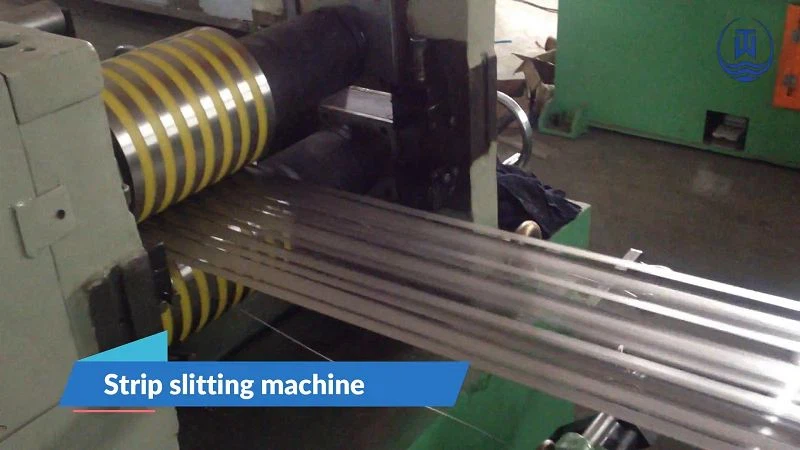
Straightening and guiding units help control wire geometry prior to subsequent processing steps, effectively removing excessive curvature, unstable lateral movement, and poor alignment.
Wire Tension Control Equipment
Maintaining stable tension prevents wire deformation, surface scratching, and loose winding, guaranteeing proper package formation and smooth unwinding across the entire operating speed range.
Equipment Selection And Procurement Steps
Step 1: Define the Welding Wire. Establish precise technical specifications covering wire type, wire material, diameter range (minimum and maximum), surface condition, required straightness, and target production speed.
Step 2: Define the Finished Package. Specify spool or coil type, core diameter, outside diameter, winding width, maximum package weight, target wire weight per package, and required winding pattern.
Step 3: Match Line Speed. Ensure the system satisfies overall operational balance, confirming that required take-up capacity equals or exceeds upstream production output.
Step 4: Evaluate Changeover Requirements. Assess how different spool sizes are changed, which components require manual or automated adjustment, traverse width adjustability, winding tension setting methods, recipe storage, and total changeover downtime.
Technical Parameters To Request
Wire Parameters
Welding wire type and material, wire diameter range and tolerance, surface condition, and required production speed.
Winding Parameters
Winding speed and maximum winding diameter, winding width, spool or core diameter, maximum package weight, winding tension, traverse method, and winding pattern.
Equipment & Compliance Parameters
Motor power, drive and control architecture, tension-control method, spindle configuration, wire-guiding method, machine dimensions, and weight. International Standards Compliance should include CE conformity, ISO quality management alignment, and UL/CSA electrical panel specifications for global export compatibility.
Potential Operational Issues & Solutions
Uneven Wire Winding
Prevented by ensuring correct traverse synchronization and conducting winding sample tests prior to purchase.
01
Excessive or Unstable Tension
Managed by rigorously evaluating closed-loop tension control across the entire operating speed range.
02
Package Capacity Mismatch
Verified by confirming actual wire weight per package for specific wire diameters and density targets.
03
Line Bottlenecks
Avoided by calculating complete line balance rather than comparing isolated machine speeds.
04
Excessive Changeover Time
Minimized by reviewing automated quick-change tooling versus manual adjustment procedures.
05
FAQ