

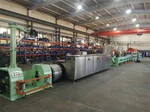
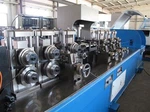
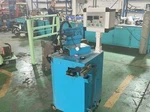
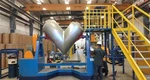
Other Auxiliary Equipment
Guide to Industrial Steel Strip Winding and Drum Packaging Systems
Steel strip drum packaging machines and steel strip winding machines are designed to wind continuous metal strip into controlled coils and pack the finished products into drums, reels, or specified strip cores.
For steel producers, steel service centers, slitting lines, and metal processing plants, such equipment is typically positioned downstream in the production line. Strip handling, winding tension control, coil formation, and packaging processes directly determine the quality of the finished coil as well as subsequent handling and deep processing.
Therefore, equipment selection should be based on actual strip specifications, coil dimensions, winding methods, production pace, and packaging requirements, rather than relying solely on nominal machine models.


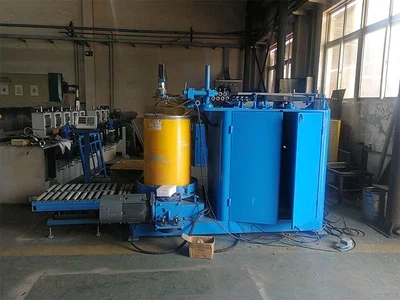
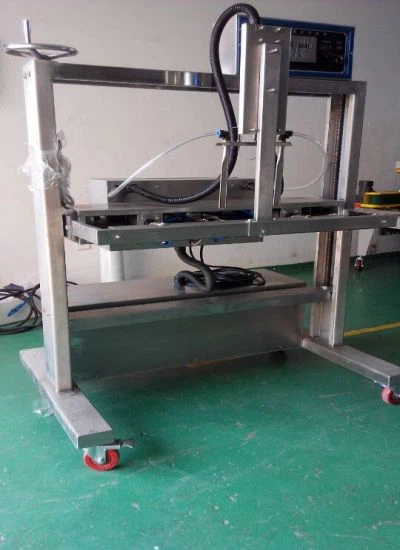
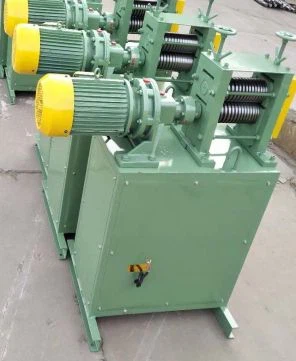
What is a Steel Strip Drum Packaging Machine?
A steel strip drum packaging machine is a production line packaging system used to wind and secure continuous strip material into a drum or reel.
Depending on specific configuration requirements, the system can integrate:
- Strip feeding
- Tension control
- Drum or reel loading
- Strip winding
- Coil formation
- Winding speed control
- Strip length or quantity control
- Drum positioning
- Coil securing
- Packaging or wrapping operations
- Finished-coil discharge
In steel strip applications, the winding process must maintain stable strip tension and precise alignment. Poor tension control can lead to loose coils, telescoping, uneven edges, or deformation during handling.
Consequently, this equipment should be evaluated as an integral part of the complete strip processing line rather than as an isolated packaging unit.
What is a Steel Strip Winding Machine?
A steel strip winding machine is used to wind continuous steel strip around a drum, reel, arbor, or specified core into compact, controlled coils.
It is typically installed downstream of the following process sequence:
Steel Strip Coil -> Slitting or Cutting -> Strip Feeding -> Tension Control -> Winding -> Coil Securing -> Packaging -> Finished Product
The winding system determines the consistency of layer-by-layer strip arrangement. Key operating parameters typically include:
|
Parameter |
Why It Matters |
|
Strip width |
Determines the winding head, guide devices, and available winding range |
|
Strip thickness |
Influences tension, bending behavior, and drive requirements |
|
Strip material |
Affects winding tension and operational characteristics |
|
Strip length |
Determines the weight and diameter of the finished coil |
|
Winding diameter |
Determines the required drum/reel and machine capacity |
|
Drum/core dimensions |
Determines compatibility with the winding station |
|
Line speed |
Impacts productivity and tension control requirements |
|
Coil weight |
Dictates mechanical load and handling requirements |
|
Strip surface |
Influences guiding, contact, and protection requirements |
|
Edge condition |
Affects strip alignment and telescoping risks |
These two concepts are closely related but do not always refer to the exact same equipment.
Steel Strip Winding Machine: Its core function is "controlled winding." It is applied when the primary requirement is converting continuous steel strip into reels or coils with controlled tension, alignment, layer formation, diameter, winding speed, and structural stability.
Drum Packaging Machine: Its function extends beyond winding to drum-based packaging and finished coil handling. It typically combines winding with drum loading, coil securing, protective wrapping, packaging, and finished drum handling/discharge.
For procurement, the core question is whether the project requires a standalone winding machine or a complete integrated drum winding and packaging system. This distinction directly affects machine configuration, shop layout, automation level, handling equipment, and overall project cost.

Typical Applications
Steel strip winding and strip packaging equipment are widely used in metal processing scenarios where continuous steel strip must be converted into stable, transportable coils:
Steel Strip Processing: Deployed downstream of slitting and other strip processing equipment to wind precision-finished strip into drums or reels.
Steel Service Centers: Suitable for cutting master coils into narrow strips and performing controlled rewinding for storage, shipping, or subsequent manufacturing.
Metal Strip Manufacturing: Used for stable coil formation of continuous strip products prior to inspection, storage, or dispatch.
Slitting Line Integration: The winding station operates as part of a larger line comprising uncoiling, leveling/processing, slitting, tension control, winding, and packaging.
Export Packaging: For cross-border ocean transport of steel strip, stable winding and secure packaging help minimize transit displacement, edge damage, and handling issues.
How to Select the Right Machine
The most critical selection criteria are material specifications and finished coil requirements. Before requesting a quotation, buyers should prepare the following core evaluation dimensions:
|
Evaluation Dimension |
Key Parameters to Define |
Why It Matters / Selection Tips |
|
A. Strip Specification |
• Material grade • Strip width & thickness • Min/max dimensions & fixed lengths • Surface & edge conditions • Yield and tensile strength characteristics |
Never select a winder based on strip width alone. Thickness, material properties, and finished coil weight heavily impact the required winding system. |
|
B. Finished Coil Requirements |
• Drum or reel type & arbor diameter • Max/min outer diameter & max coil weight • Strip length per drum & winding direction • Number of coils per cycle & packaging style |
If a single machine must handle multiple product sizes, define the full operating range during technical evaluation to ensure mechanical compatibility. |
|
C. Production Requirements |
• Target line speed & required capacity • Working hours per shift & number of shifts • Changeover frequency & loading/unloading mode • Upstream equipment integration requirements |
Machines optimized for low-speed batch production are generally unsuitable for high-output continuous slitting lines and must match production rhythm. |
Winding Tension: A Critical Selection Factor
For steel strip, winding quality largely depends on maintaining controlled tension throughout the entire winding cycle.
Insufficient tension can cause: Loose coils, telescoping, unstable coil structure, shifting layers, and poor transit stability.
Excessive tension can lead to: Strip distortion, edge damage, surface indentation, overloading of mechanical drives, and difficulties during subsequent uncoiling.
Therefore, the tension control system must be evaluated alongside strip thickness, material strength, winding diameter, and line speed. For multi-product applications, buyers should require suppliers to confirm applicable tension ranges and control methods for each material state.

Strip Alignment and Edge Control
A high-quality steel strip coil must maintain controlled lateral alignment throughout the winding cycle. Important design considerations include:
- Strip guiding
- Drum alignment
- Winding head positioning
- Lateral shift control
- Tension stability
- Drum runout
- Infeed strip alignment
For narrow strip or high-speed applications, minor alignment errors compound over multiple wound layers. Consequently, suppliers must explain how strip alignment is maintained rather than relying on generic claims of "high winding accuracy."
Drum and Core Compatibility
The drum is one of the most critical interfaces between the machine and the final product. Prior to equipment selection, confirm:
Drum/Core
Arbor diameter, arbor width, outer drum diameter, drum material, drum weight, loading method, and locking mechanism.
Finished Coil
Maximum outer diameter, maximum width, and maximum weight.
If multiple drum sizes are required, evaluate changeover times and mechanical compatibility across different drum specifications.
Automation Options
The required level of automation depends on production volume and labor considerations.
Semi-Automatic Configuration
Suitable for operations where operators handle drum loading, threading, coil securing, finished unloading, and packaging steps. Ideal for small-batch or flexible production.
Fully Automatic Configuration
Higher automation integrates auto-loading, auto-feeding, auto-winding, programmed length/quantity control, auto-securing, auto-packaging, finished discharge, and production status monitoring.
Pre-Shipment Quality Inspection
For industrial winding equipment, buyers should evaluate not only machine specifications but also how the complete assembly is verified before delivery. A practical Factory Acceptance Test (FAT) typically includes:
Mechanical Inspection
Verification of overall dimensions, drum/core compatibility, moving parts, safety guards, mechanical alignment, and fastening quality.
Electrical Inspection
Inspection of control panels, wiring, sensors, motor drives, PLC functions, operator interfaces, and safety circuits.
Functional Testing
Verification under test material conditions for feeding, winding, speed control, tension performance, alignment, drum motion, changeovers, and emergency stops.
Recommended Procurement Workflow
Step 1: Define Materials (Confirm steel strip grade, width, thickness, and surface/edge condition).
Step 2: Define Finished Coils (Confirm drum/core, outer diameter, weight, and winding requirements).
Step 3: Define Production Parameters (Set target line speed, output, and changeover requirements).
Step 4: Define Automation Level (Determine automation needs for loading, winding, securing, packaging, and material handling).
Step 5: Request Technical Proposals (Obtain machine specifications, layout drawings, utility schedules, control descriptions, and interface requirements).
Step 6: Verify Process Suitability (Require suppliers to confirm proposed solutions cover the entire material range).
Step 7: Review Testing Standards (Establish clear FAT acceptance criteria before signing purchase agreements).
Step 8: Confirm Installation Matters (Clarify foundation, utilities, commissioning, training, and acceptance procedures).
Step 9: Finalize Spare Parts List (Determine commissioning spares and daily consumable items).
Frequently Asked Questions