Air flow plays a crucial role in the drying process of a Welding Powder Dryer. As a supplier of Welding Powder Dryer, we have witnessed firsthand the significant impact that air flow can have on the drying effect. In this blog post, we will explore the various aspects of air flow and its influence on the drying performance of a Welding Powder Dryer.
The Basics of Air Flow in a Welding Powder Dryer
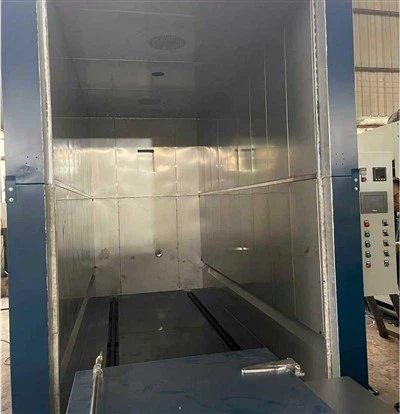
Before delving into the impact of air flow on the drying effect, it is essential to understand the basic principles of air flow in a Welding Powder Dryer. The dryer typically consists of a chamber where the welding powder is placed, and a system for circulating air through the chamber. The air flow serves two main purposes: to carry away the moisture from the powder and to provide heat for the drying process.
The air flow rate is a critical factor in determining the drying efficiency. A higher air flow rate can increase the rate of moisture removal, but it also requires more energy. On the other hand, a lower air flow rate may result in longer drying times and uneven drying. Therefore, finding the optimal air flow rate is crucial for achieving the best drying results.
Impact of Air Flow on Moisture Removal
One of the primary functions of air flow in a Welding Powder Dryer is to remove moisture from the powder. When the air passes through the powder, it picks up the moisture and carries it away. The efficiency of moisture removal depends on several factors, including the air flow rate, the temperature of the air, and the humidity of the air.
A higher air flow rate can increase the rate of moisture removal because it allows more air to come into contact with the powder. This means that more moisture can be picked up and carried away. However, if the air flow rate is too high, it may cause the powder to be blown out of the dryer or result in uneven drying.


The temperature of the air also plays a significant role in moisture removal. Warmer air can hold more moisture than cooler air, so increasing the temperature of the air can enhance the drying process. However, it is important to note that excessive heat can damage the powder or cause it to lose its properties. Therefore, the temperature of the air must be carefully controlled to ensure optimal drying conditions.
The humidity of the air is another factor that affects moisture removal. If the air is already saturated with moisture, it will be less effective at removing moisture from the powder. Therefore, it is often necessary to dehumidify the air before it enters the dryer to improve the drying efficiency.
Impact of Air Flow on Heat Transfer
In addition to moisture removal, air flow also plays a crucial role in heat transfer in a Welding Powder Dryer. The air acts as a medium for transferring heat from the heating source to the powder. The efficiency of heat transfer depends on several factors, including the air flow rate, the temperature difference between the air and the powder, and the surface area of the powder.
A higher air flow rate can increase the rate of heat transfer because it allows more air to come into contact with the powder. This means that more heat can be transferred from the air to the powder. However, if the air flow rate is too high, it may cause the powder to be cooled down too quickly, resulting in uneven drying.
The temperature difference between the air and the powder is also an important factor in heat transfer. A larger temperature difference will result in a higher rate of heat transfer. Therefore, it is often necessary to maintain a sufficient temperature difference between the air and the powder to ensure efficient drying.
The surface area of the powder also affects heat transfer. A larger surface area allows more air to come into contact with the powder, which increases the rate of heat transfer. Therefore, it is often beneficial to use a dryer with a design that maximizes the surface area of the powder.
Impact of Air Flow on Drying Uniformity
Another important aspect of the drying process is the uniformity of drying. Uneven drying can result in inconsistent quality of the welding powder, which can affect its performance in welding applications. Air flow plays a crucial role in ensuring uniform drying.
A well-designed air flow system can ensure that the air is evenly distributed throughout the dryer chamber. This means that all parts of the powder are exposed to the same amount of air and heat, resulting in uniform drying. On the other hand, a poor air flow system may cause some parts of the powder to be over-dried while other parts are under-dried.
To achieve uniform drying, it is often necessary to use a combination of air flow and agitation. Agitation can help to ensure that the powder is evenly mixed and exposed to the air. This can be achieved through the use of rotating drums, vibrating trays, or other mechanical devices.
Optimizing Air Flow for Better Drying Results
As a supplier of Welding Powder Dryer, we understand the importance of optimizing air flow for better drying results. Here are some tips for optimizing air flow in a Welding Powder Dryer:
- Choose the right air flow rate: The air flow rate should be carefully selected based on the type and quantity of powder being dried. A higher air flow rate may be suitable for larger quantities of powder, while a lower air flow rate may be more appropriate for smaller quantities.
- Control the temperature and humidity of the air: The temperature and humidity of the air should be carefully controlled to ensure optimal drying conditions. This may require the use of heaters, coolers, and dehumidifiers.
- Design the air flow system for uniform distribution: The air flow system should be designed to ensure that the air is evenly distributed throughout the dryer chamber. This may require the use of baffles, diffusers, or other air flow control devices.
- Use agitation to improve drying uniformity: Agitation can help to ensure that the powder is evenly mixed and exposed to the air. This can be achieved through the use of rotating drums, vibrating trays, or other mechanical devices.
Conclusion
In conclusion, air flow plays a crucial role in the drying effect of a Welding Powder Dryer. The air flow rate, temperature, humidity, and distribution all have a significant impact on the drying efficiency, moisture removal, heat transfer, and drying uniformity. By optimizing the air flow in a Welding Powder Dryer, it is possible to achieve better drying results and improve the quality of the welding powder.
As a leading supplier of Welding Powder Dryer, we are committed to providing our customers with high-quality products and solutions. If you are interested in learning more about our Welding Powder Dryers or other welding wire auxiliary equipment, such as High Precision Vacuum Packaging Machine and Butt Welding Wire Machine Manufacturers, please feel free to contact us for a detailed consultation. We look forward to working with you to meet your specific needs.
References
- Perry, R. H., & Green, D. W. (Eds.). (2007). Perry's Chemical Engineers' Handbook. McGraw-Hill.
- Geankoplis, C. J. (2003). Transport Processes and Unit Operations. Prentice Hall.
- Mujumdar, A. S. (Ed.). (2007). Handbook of Industrial Drying. CRC Press.