Hey there! As a supplier of Drawing Die Accessories, I often get asked about how to choose the right hardness for these accessories. It's a crucial decision that can significantly impact the performance and lifespan of your drawing dies. So, let's dive right in and explore this topic in detail.
Understanding the Importance of Hardness in Drawing Die Accessories
First off, why is hardness so important? Well, in the world of drawing dies, hardness determines how well the accessories can withstand wear and tear. When you're drawing wires, tubes, or other materials, the dies are constantly in contact with the workpiece. This contact creates friction, which can cause the dies to wear down over time. A harder die accessory can resist this wear better, leading to longer tool life and more consistent product quality.
But it's not just about wear resistance. Hardness also affects the die's ability to maintain its shape under pressure. During the drawing process, the dies are subjected to high forces. If the die is too soft, it may deform, resulting in inconsistent dimensions of the drawn product. On the other hand, if it's too hard, it may become brittle and prone to cracking.
Factors to Consider When Choosing Hardness
Material of the Workpiece
The type of material you're drawing plays a huge role in determining the right hardness for your die accessories. For example, if you're working with soft materials like aluminum or copper, you can get away with a slightly softer die. These materials don't put as much stress on the dies, so a lower hardness can still provide adequate wear resistance.
However, if you're drawing hard materials like steel or titanium, you'll need a much harder die. These materials are more abrasive and require a die that can withstand the high forces and wear. In general, the harder the workpiece, the harder the die accessory should be.
Drawing Speed
The speed at which you're drawing the material also affects the hardness requirements. Higher drawing speeds generate more heat and friction, which can accelerate wear on the dies. If you're operating at high speeds, you'll need a harder die to withstand the increased stress.
Conversely, if you're drawing at a slower pace, you may be able to use a slightly softer die. This can be beneficial as softer dies are often more ductile and less prone to cracking.
Precision Requirements
If you're working on a project that requires high precision, you'll need a die with a consistent hardness. Inconsistent hardness can lead to variations in the dimensions of the drawn product, which can be a major problem in applications where tight tolerances are required.
For example, in the aerospace industry, components need to be manufactured to extremely precise specifications. Using a die with the right hardness is essential to ensure that the final product meets these requirements.
Different Types of Drawing Die Accessories and Their Hardness Requirements
Bobin Accessories
Bobin accessories are commonly used in wire drawing processes. These accessories need to have a good balance of hardness and toughness. They need to be hard enough to resist wear from the wire, but also tough enough to withstand the bending and twisting forces that occur during the drawing process.
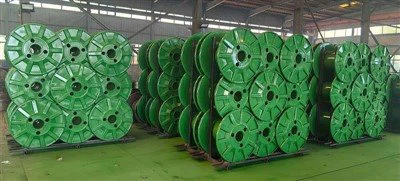
You can find a wide range of Bobin Accessories that are designed to meet different hardness requirements. When choosing bobin accessories, consider the material of the wire you're drawing and the drawing speed.
Capstan Accessories
Capstan accessories are used to guide and control the movement of the wire during the drawing process. These accessories need to have a high level of hardness to resist wear from the wire. They also need to be able to maintain their shape under high tension.
If you're looking for Capstan Accessories, make sure to choose ones that are made from high-quality materials and have the appropriate hardness for your application.


Rolling Die Accessories
Rolling die accessories are used in rolling processes to shape and size the material. These accessories need to have a very high hardness to withstand the high pressures and forces involved in the rolling process.
When selecting Rolling Die Accessories, consider the type of material you're rolling and the desired finish of the product. A harder die can provide a smoother finish, but it may also be more prone to cracking.
Testing and Measuring Hardness
Once you've selected the appropriate hardness for your drawing die accessories, it's important to test and measure the hardness to ensure that it meets your requirements. There are several methods for testing hardness, including the Rockwell, Brinell, and Vickers hardness tests.
The Rockwell hardness test is one of the most commonly used methods. It measures the depth of penetration of an indenter into the material under a specific load. The Brinell hardness test uses a spherical indenter to create an indentation in the material, and the hardness is determined by measuring the diameter of the indentation. The Vickers hardness test is similar to the Brinell test, but it uses a diamond indenter and measures the diagonal length of the indentation.
By regularly testing and measuring the hardness of your die accessories, you can ensure that they are performing at their best and that your drawing process is running smoothly.
Conclusion
Choosing the right hardness for drawing die accessories is a critical decision that can have a significant impact on the performance and lifespan of your dies. By considering factors such as the material of the workpiece, drawing speed, and precision requirements, you can select the appropriate hardness for your specific application.
If you're in the market for high-quality drawing die accessories, we're here to help. We offer a wide range of products, including Bobin Accessories, Capstan Accessories, and Rolling Die Accessories, that are designed to meet your hardness requirements.
If you have any questions or need further assistance in choosing the right hardness for your drawing die accessories, don't hesitate to reach out. We're always happy to help you make the best decision for your business.
References
- "Metal Forming Handbook" by Society of Manufacturing Engineers
- "Materials Science and Engineering: An Introduction" by William D. Callister Jr. and David G. Rethwisch